The UCI Health — Irvine medical campus turns a blank canvas into a masterpiece of care, comfort and sustainability
By Samantha Bonar
Hospital visits aren’t something most people look forward to, but UCI Health — Irvine and the surrounding medical campus are designed to make the experience easier to navigate, comfortable and connected to the surrounding environment.
“We were able to establish design principles early in the process that placed patient experience at the forefront of every single design decision,” says Paul Da Veiga, director of planning, design and construction for UCI Health.
Patient care remained the guiding priority throughout the project. The design team also focused on creating an environment that fully supports physicians, nurses and staff, while advancing UCI Health’s ambitious sustainability goals. From the outset, leaders envisioned a facility that would set a new standard for environmentally responsible healthcare through its all-electric design.
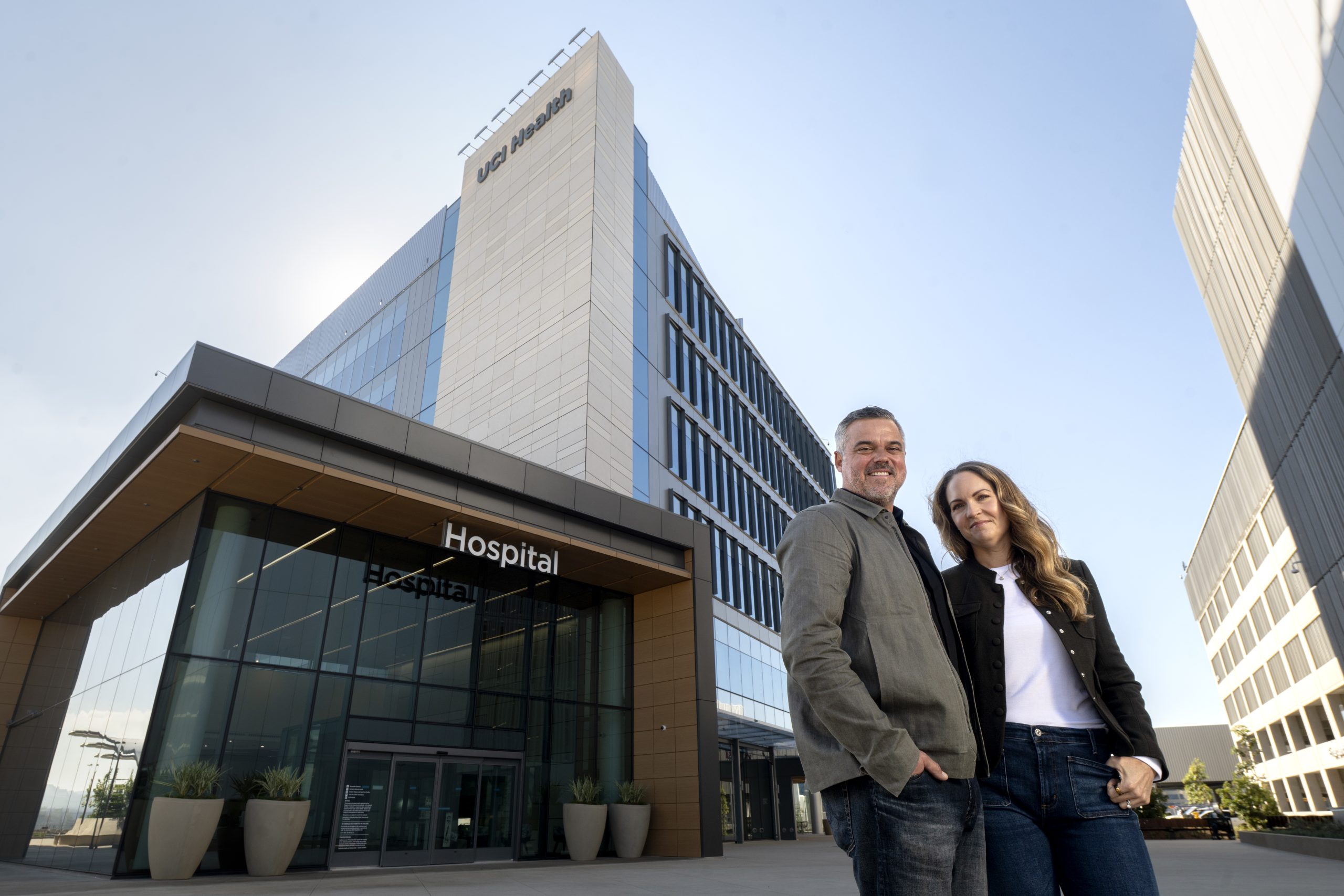
Exterior of the Chao Family Comprehensive Cancer Center and Ambulatory Care building. Photo credit: Steve Zylius/UC Irvine
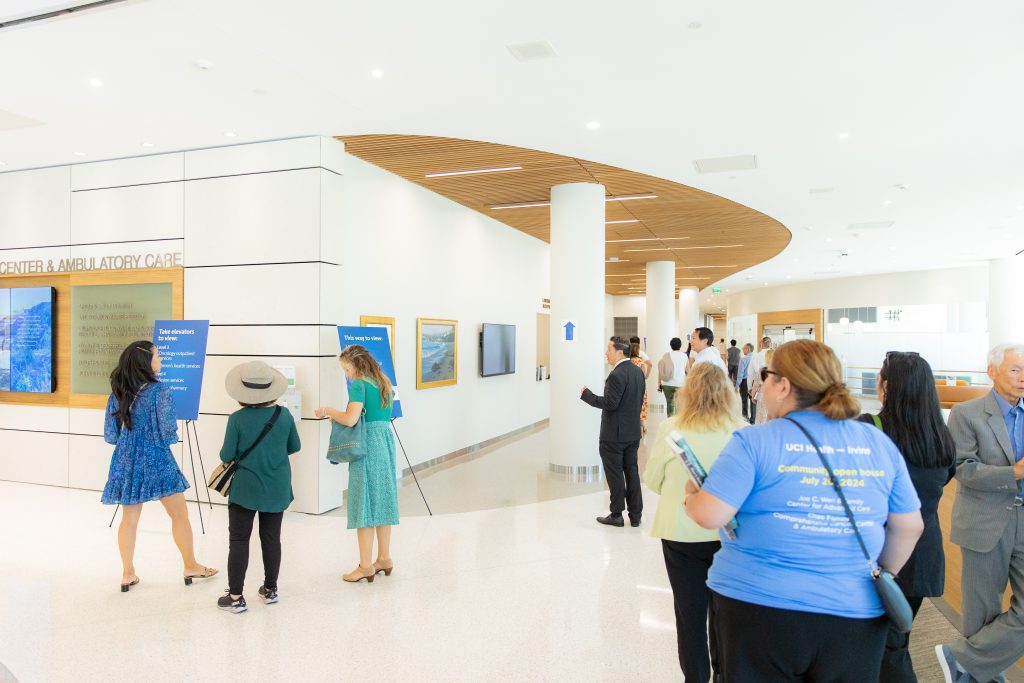
The Chao Family Comprehensive Cancer Center and Ambulatory Care features artwork of California coastal landscapes. Photo credit: Christopher Todd Studios
A Vision Decades in the Making
According to Da Veiga, the vision for a hospital near campus dates back to the late 1960s.
“This was our opportunity to establish a medical center right next to where all that amazing research and teaching was happening,” he says.
Planning gained momentum in 2018, when market data revealed that many patients were leaving the area to get specialized care in oncology and orthopedics. Design began in earnest in 2020, when architectural firms were invited to submit plans.
Some planners, Da Veiga says, “turned their backs” on the marsh. But UCI Health planners saw an opportunity to incorporate the vast wetlands into their vision of the ultimate healing environment. They selected CO Architects, whose proposal made the marsh a central feature of the design.
More than 300 bird species visit the marsh, which sits on the Pacific Flyway, the major migratory route stretching from the Arctic to Patagonia. From patient rooms to public gathering areas, spaces throughout the 1.2 million-square-foot campus were intentionally oriented to capture views of the wetlands.
The buildings are suffused with natural light and feature calming colors that echo the surrounding landscape, extensive artwork, and outdoor terraces, walkways and gardens designed for patients, families and co-workers alike.
But thoughtful design was just the starting point.
Surgery, Reimagined
Beneath the hospital and the adjacent Chao Family Comprehensive Cancer Center and Ambulatory Care building lies a garden-level surgical “megafloor.”
Roughly the width of three football fields, it brings inpatient and outpatient surgery together on a single floor with access to the latest imaging technologies. The unique configuration lets patients move seamlessly between services – rather than, for example, needing an ambulance ride across campus for an MRI. At its center sits a sterile processing department that keeps surgical operations running efficiently.
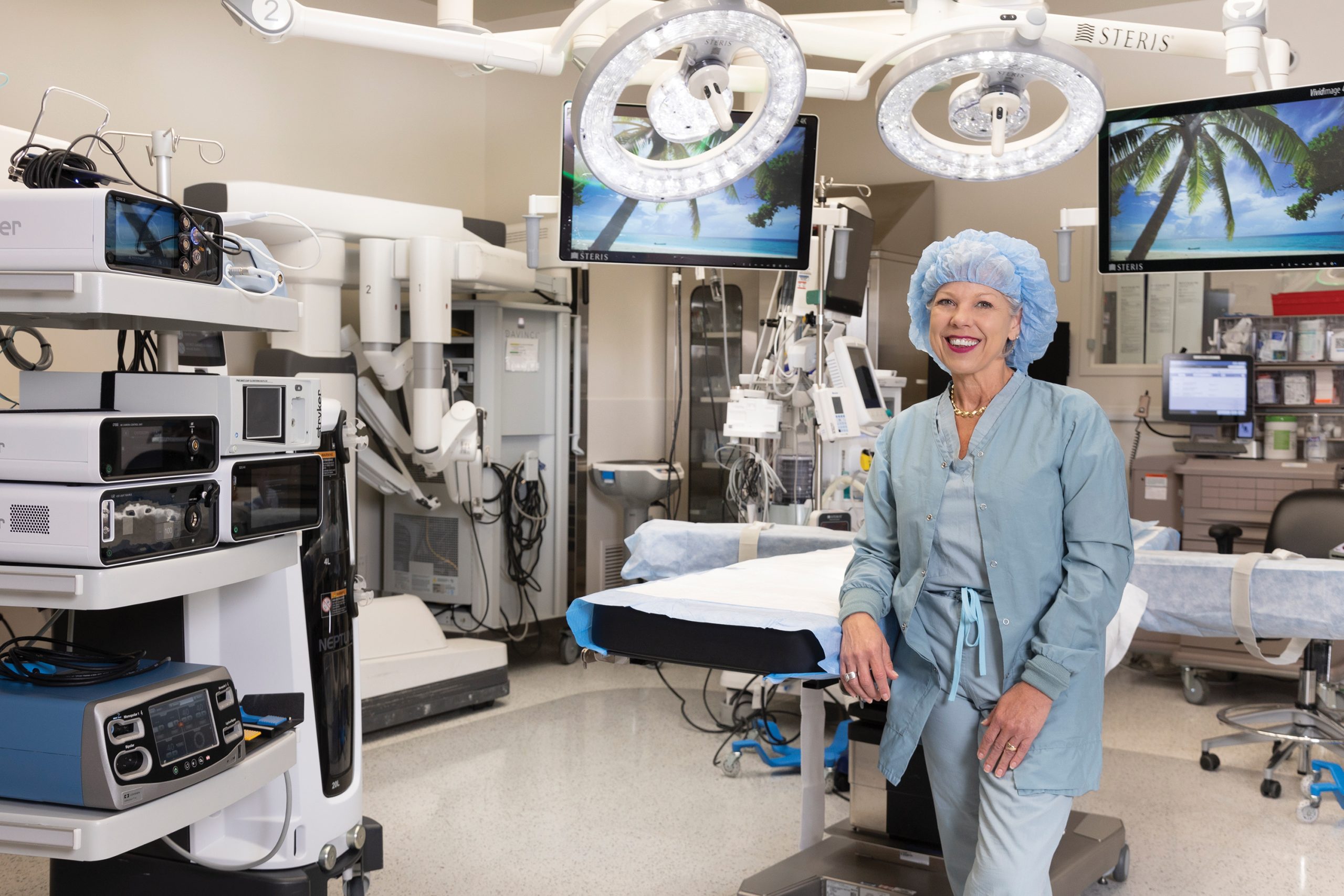
Mara Rosalsky, R.N., M.S.N., vice president of perioperative services, helped design the surgical spaces with both efficiency and patient comfort in mind. Air flow from the ceiling creates a “sterile curtain” around the patient, while warming mattresses help maintain body temperature during procedures. Surgical lights were designed with small perforations – more like a showerhead than a spotlight – so they don’t disrupt that airflow. Large surgical equipment is ergonomically designed and easy to move.
The “megafloor” lets patients move seamlessly between surgery services while keeping operations running smoothly with organized supplies and a sterile processing department.
Mara Rosalsky, vice president of perioperative services at UCI Health and surgical operations at the new hospital | Photo credit: Remy Haynes
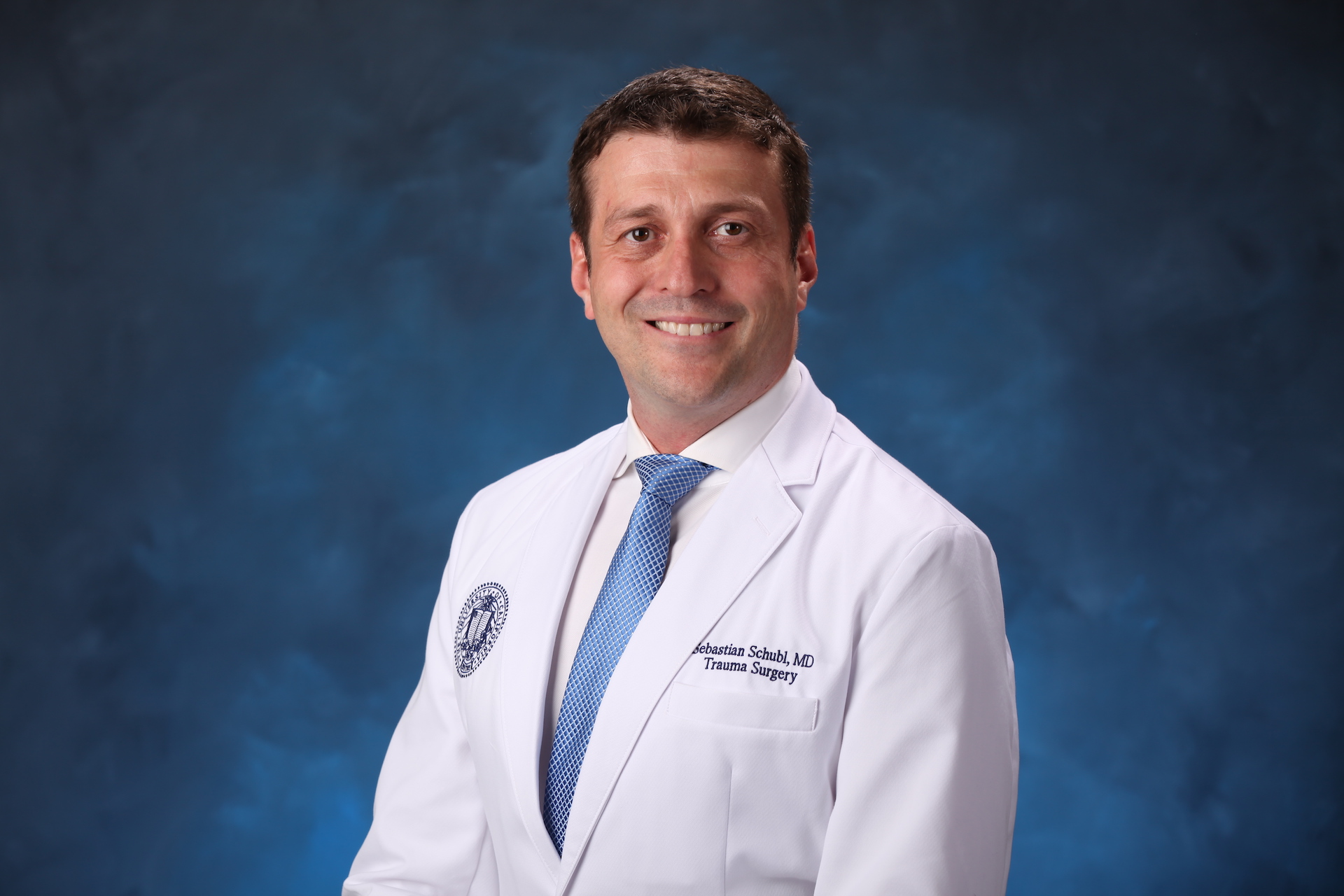
Sebastian Schubl, M.D.
“We were able to build a place to perform surgery that I consider to be the very best place you can do an operation,” says UCI Health surgeon Sebastian Schubl, M.D., who played a key role in the surgical floor’s design. “Everything you need is right at hand. The layout, the ergonomics, everything – from where they put the electrical outlets to where lights are fixed to the ceiling and what is stocked in the cabinets – was very thought through, very detailed, very intentional so that the flow of an operation is never interrupted.”
Creating flexible clinical spaces was also key. Conceived during the COVID-19 crisis, the facility’s infrastructure enables inpatient rooms to be converted to intensive care units in an emergency, enabling the hospital to accommodate major patient surges or disaster responses.
The structure was also built with special brace framing to withstand seismic events, Pratt says.
A 24-hour emergency department with 20 treatment rooms sits near the hospital’s arrival plaza and adjacent parking structure for quick access. Short, direct routes connect the emergency department, imaging services, operating rooms and inpatient units, streamlining care when every minute counts.
And all that technology runs on green energy.
A Hospital Built for the Future
Long committed to sustainability, UCI Health joined the United Nations-backed Race to Zero campaign in 2021, pledging to reach near-zero emissions by 2050. UCI Health — Irvine delivers on that promise as the nation’s first all-electric hospital.
Implementing that vision was no small feat.
“Hospitals are notorious energy hogs,” Pratt says.
UCI Health — Irvine uses 100 percent clean electricity, sourced from renewable energy programs and supplemented by solar panels installed on parking structures and rooftops. Additional sustainability features include rainwater collection and recycled water systems that safely help feed the marsh ecosystem.
Even the hospital kitchen eventually got on board, though finding the right electric charbroiler proved to be a temporary sticking point.
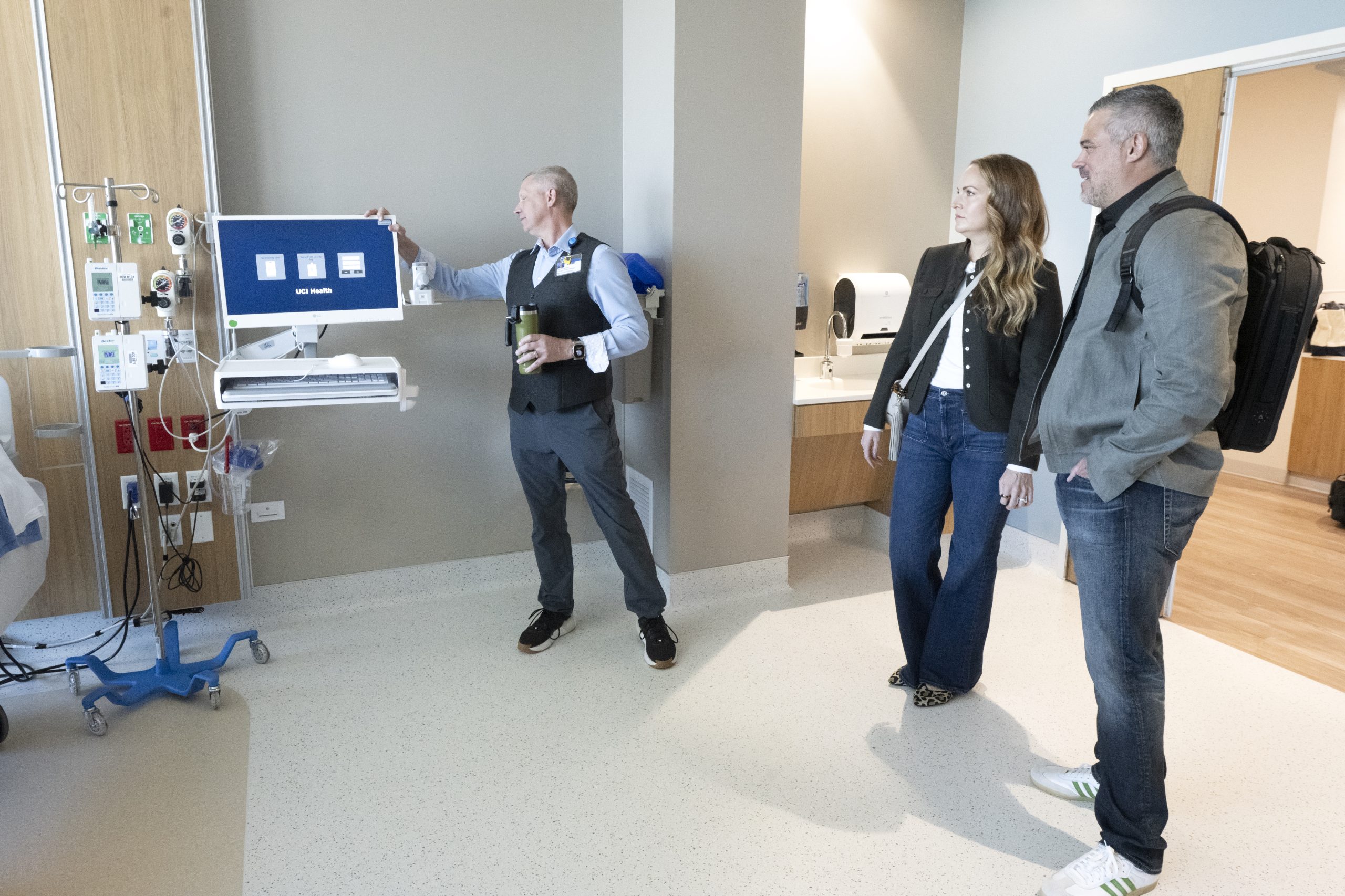
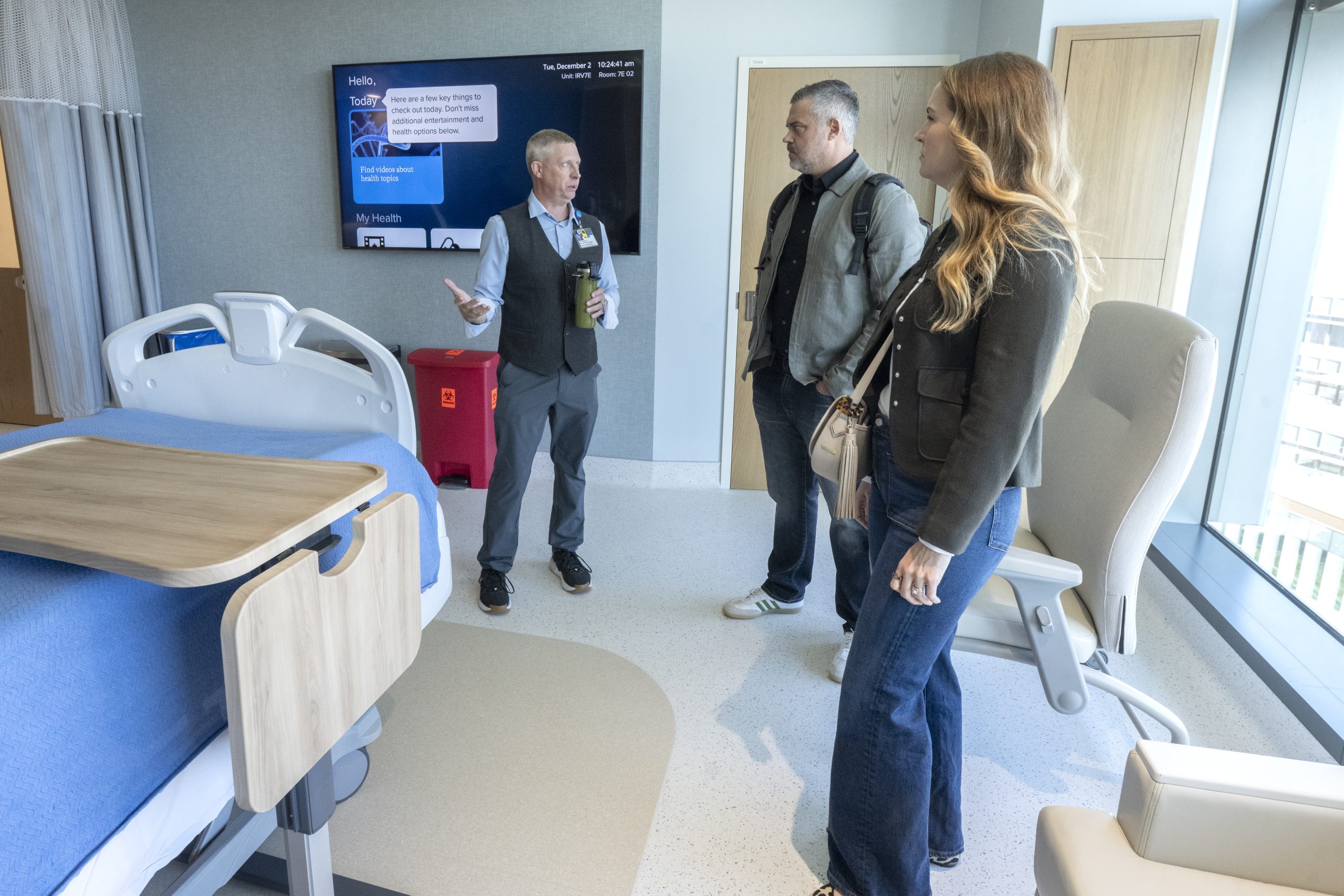
Patients can order sustainably prepared food from 75-inch smart TVs that also allow them to connect with family and friends for virtual video visits and with physicians for clinical consultations. Digital tools like these are transforming the patient experience inside each room, with interactive systems that allow patients to manage everything from entertainment and lighting to care requests and communication with their providers.
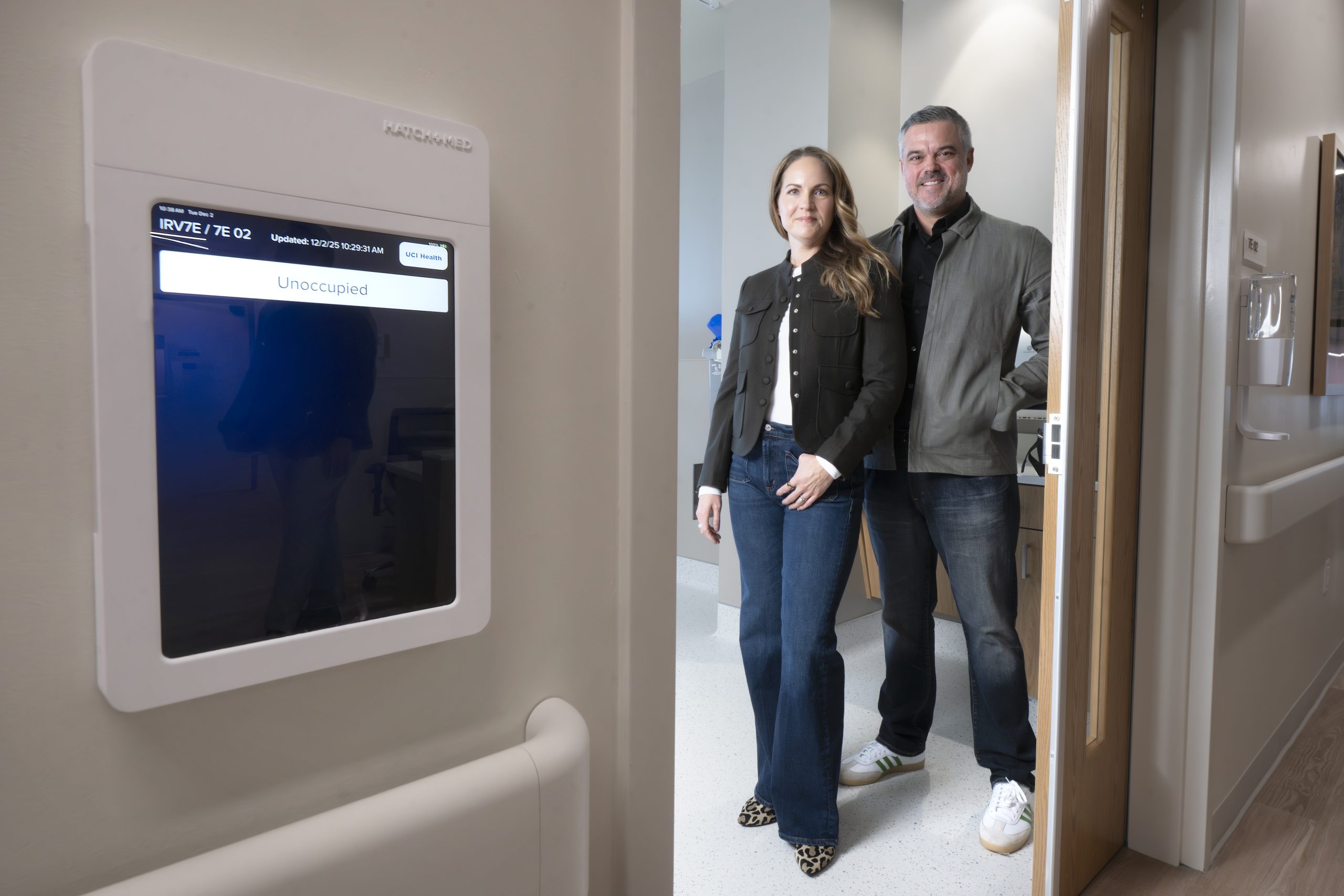
Some of that technology was developed by UC Irvine alumni. HatchMed, a healthcare company founded by Brian Hatch ’01 and Mary Hatch ’03, provides the digital whiteboards mounted outside patient rooms. The couple began as biology majors before pivoting to healthcare technology – a shift that allowed them to combine technical innovation with their interest in improving patient care.
The color-coded digital displays share key information at a glance and reduce time nurses spend on routine updates. That efficiency, Mary Hatch says, allows clinicians to focus more of their attention where it matters most: on the patient.
Brian Hatch ’01 of HatchMed says he and Mary Hatch ’03 love working with visionary clients like UC Irvine. Such clients, he says, “are willing to try new things … to think of the world differently in 20 years. We work with the hospitals of the future.”
On floors four through seven of the hospital, there are 144 private inpatient rooms that average 250 square feet and are filled with natural light and ample space for visitors. Each floor, which has its own artistic theme, also includes dedicated break lounges and “lavender rooms” – quiet spaces where clinicians can rest and decompress. Outdoor seating areas, terraces and meditation spaces with marsh views provide additional spots for reflection and relaxation.
What has emerged from what was recently an empty greenfield is a seamless integration of research, education and advanced clinical care – all of it, from the marsh views to the surgical megafloor, built on the foundational belief that the smallest details make a huge difference.
“Knowing that we are contributing to someone’s quality of life,” Pratt says, “whether it’s the end of their life or the beginning, or they’re going through a hard time as a family member or are here for a routine procedure — that’s how I measure success.”
Help Transform Patient Care
When you give to UCI Health, your support advances innovative programs and world-class care that transforms lives.