Recent UC Irvine research explores areas ranging from desalination pumps to metabolism shifts and drone security
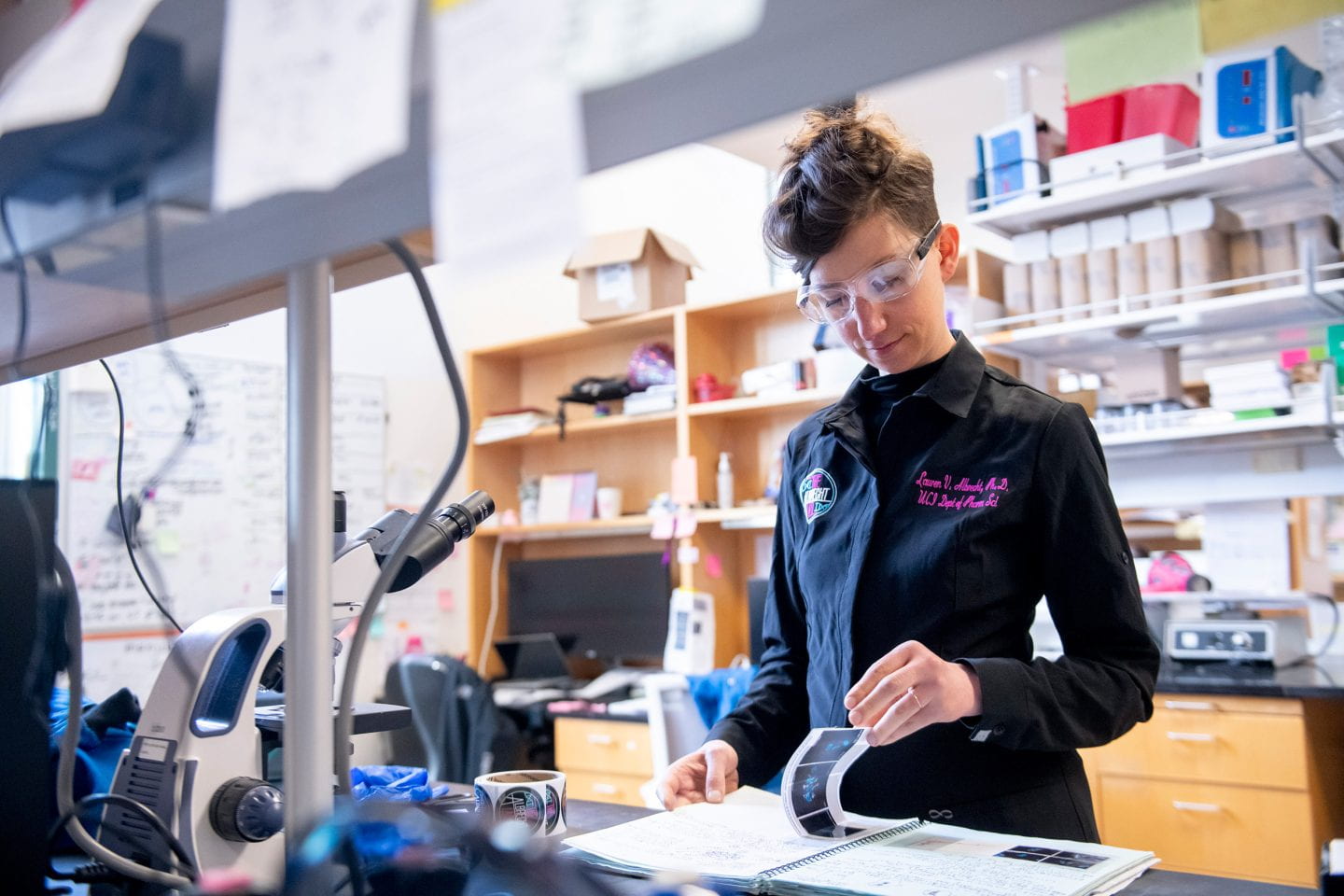
Lauren Albrecht, Ph.D., UC Irvine assistant professor of pharmaceutical sciences | Photo credit: Steve Zylius
Recent work from UC Irvine researchers is tackling challenges that span water access, metabolic health, drone security and more. Here’s a look at a few of these breakthroughs – and what they could mean in the real world.
Getting Pumped for More Clean Water
What’s going on? Scientists from UC Irvine, Tel Aviv University and other institutions created a novel ratchet-based ion pump that removes salt and other charged compounds from water without a chemical reaction.
What applications might this have? This device can desalinate seawater, helping expand access to clean water. It could also enable lithium extraction from seawater, heavy-metal removal from drinking water, battery recycling and biomedical applications.
Funded by: National Science Foundation, U.S. Department of Energy and the European Research Council
What applications might this have? The findings suggest asprosin may help maintain weight stability when metabolic health is intact – and could inform hormone-based approaches to managing weight.
Supported by: The National Institute of Diabetes and Digestive and Kidney Diseases and the National Heart, Lung, and Blood Institute
Muscle Building – From the Inside
What’s going on? Scientists at UC Irvine’s School of Pharmacy & Pharmaceutical Sciences discovered how muscle stem cells slow energy production to rebuild damaged muscle.
What applications might this have? The findings could help address muscle loss linked to aging, injury and certain weight-loss medications.
Supported by: The National Institute of General Medical Sciences, the National Institute of Arthritis and Musculoskeletal and Skin Diseases, the National Cancer Institute, and the Alfred P. Sloan Foundation
The Umbrella Attack
What’s going on? UC Irvine researchers used umbrellas with unique graphic patterns to demonstrate the “FlyTrap” attack – a technique that can disrupt autonomous target-tracking drones.
What applications might this have? The findings highlight potential vulnerabilities in drone systems, with implications for border security, law enforcement operations and personal privacy.
Funded by: NASA and the National Science Foundation
What applications might this have? With more than 65 million people worldwide affected by cataracts, this new information could help inform strategies to slow or prevent the condition before vision is affected.