The seven-story hospital was designed with moments like this in mind. It is the result of years of intentional design – a deliberate marriage of architecture, art and environment that draws on a principle now backed by decades of scientific evidence: that healthcare spaces can actively support healing, not just house it.
When planners first considered the San Joaquin Marsh Reserve at the edge of UC Irvine’s north campus, which would become the home for the medical campus, they saw what others might have missed: not an obstacle, but an opportunity.
“There is evidence-based research that shows nature makes a fundamental difference in the patient experience,” says Brian Pratt, former associate vice chancellor and campus architect. “Speed of recovery, discharge timing, family members – all are impacted. That’s why we knew this site was a differentiator.”
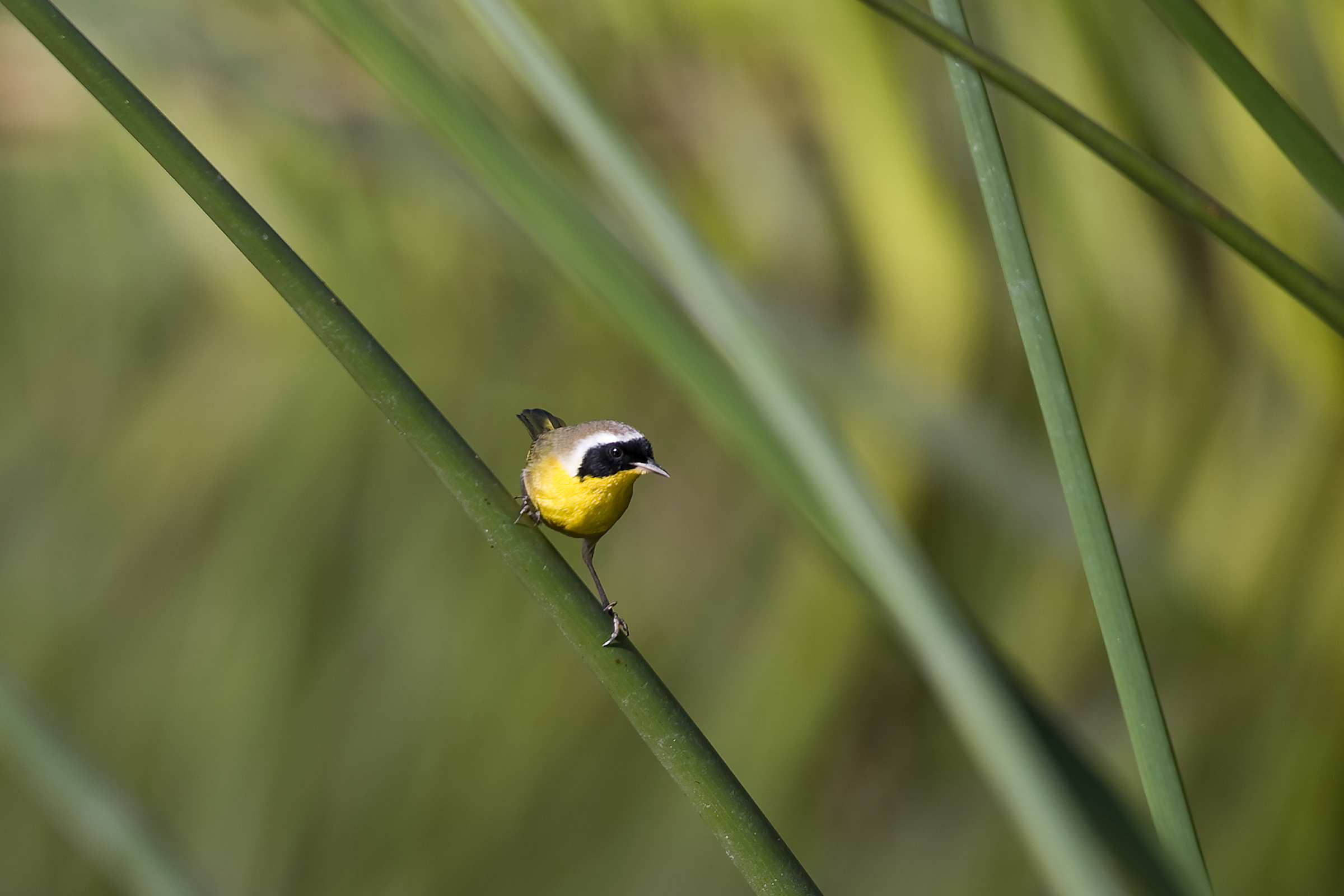
The marsh is more than scenery. It’s a living thing, home to more than 300 bird species that travel the Pacific Flyway migration route. On any given morning, a patient might spot Canada geese raising their young or a passing Swainson’s hawk flying overhead.
It is a calming engagement with a world indifferent to the urgent pace of medicine.
But building next to a sensitive habitat came with responsibilities. The design team incorporated protections for the wildlife that have long called the marsh home.
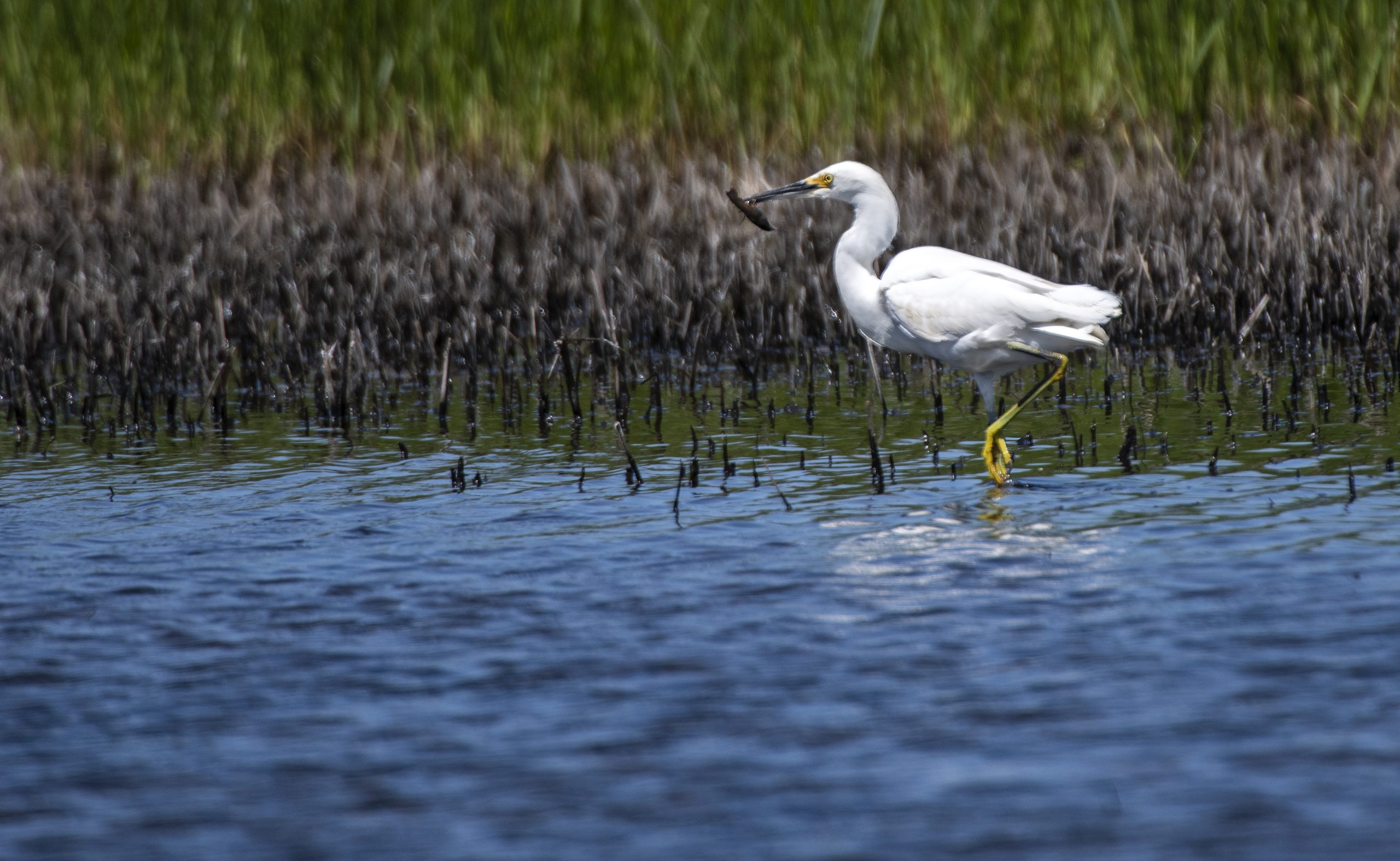
A snowy egret grabs a quick bite at the San Joaquin Marsh Reserve, managed by UCI. Photo: Steve Zylius/UCI
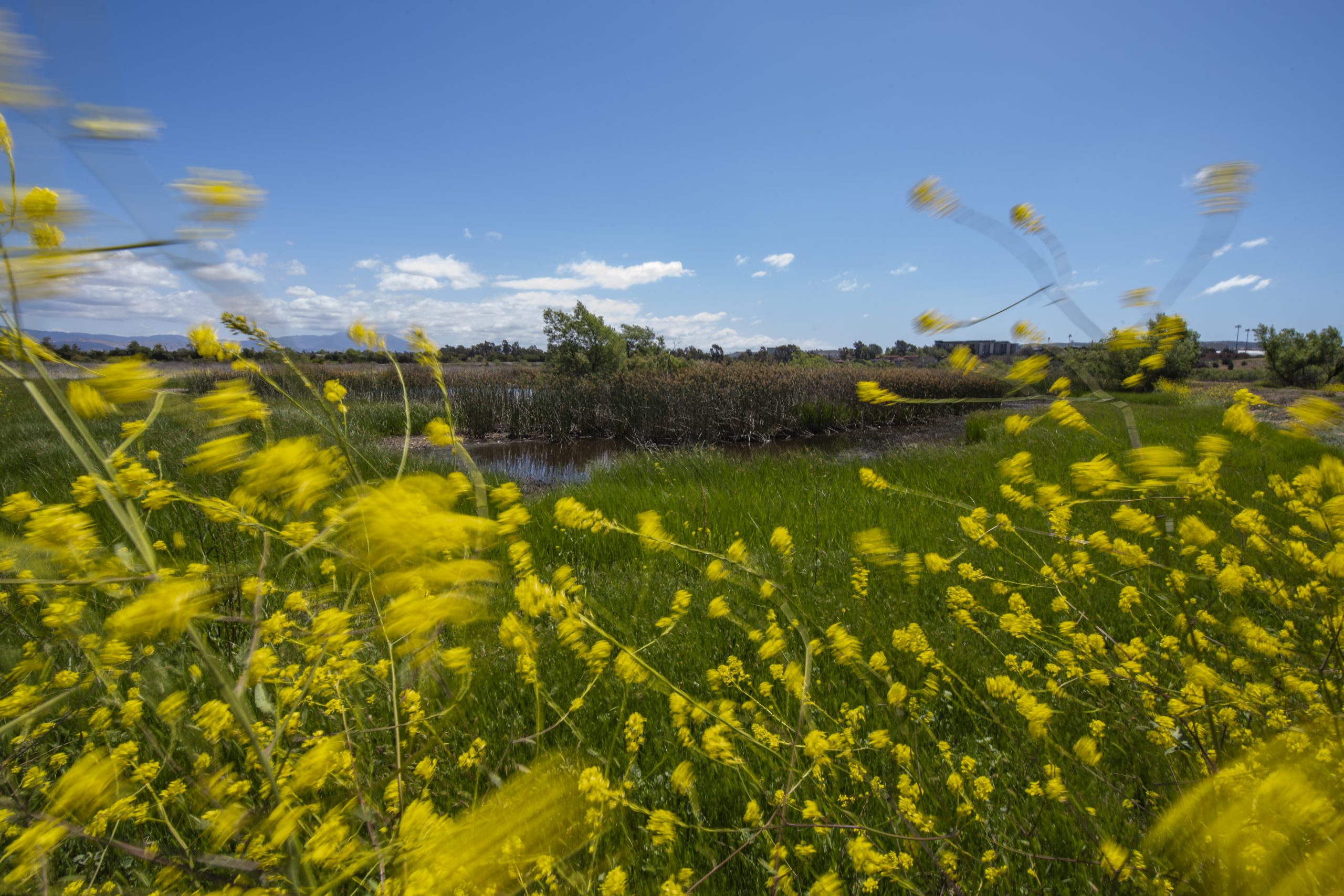
San Joaquin Marsh Reserve, managed by UCI. Photo: Steve Zylius/UCI
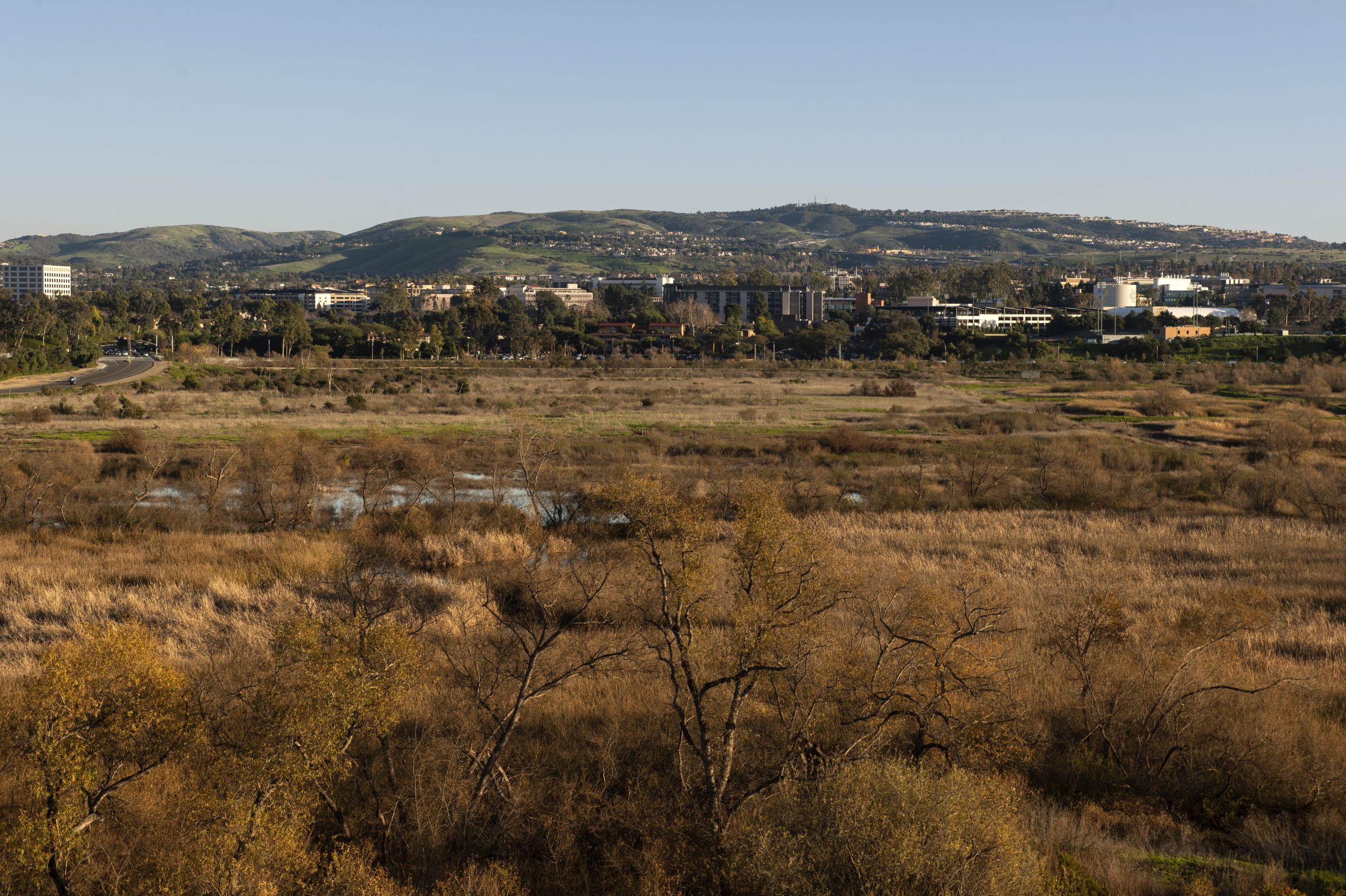
San Joaquin Marsh as viewed from construction site. Photo: Steve Zylius/UCI
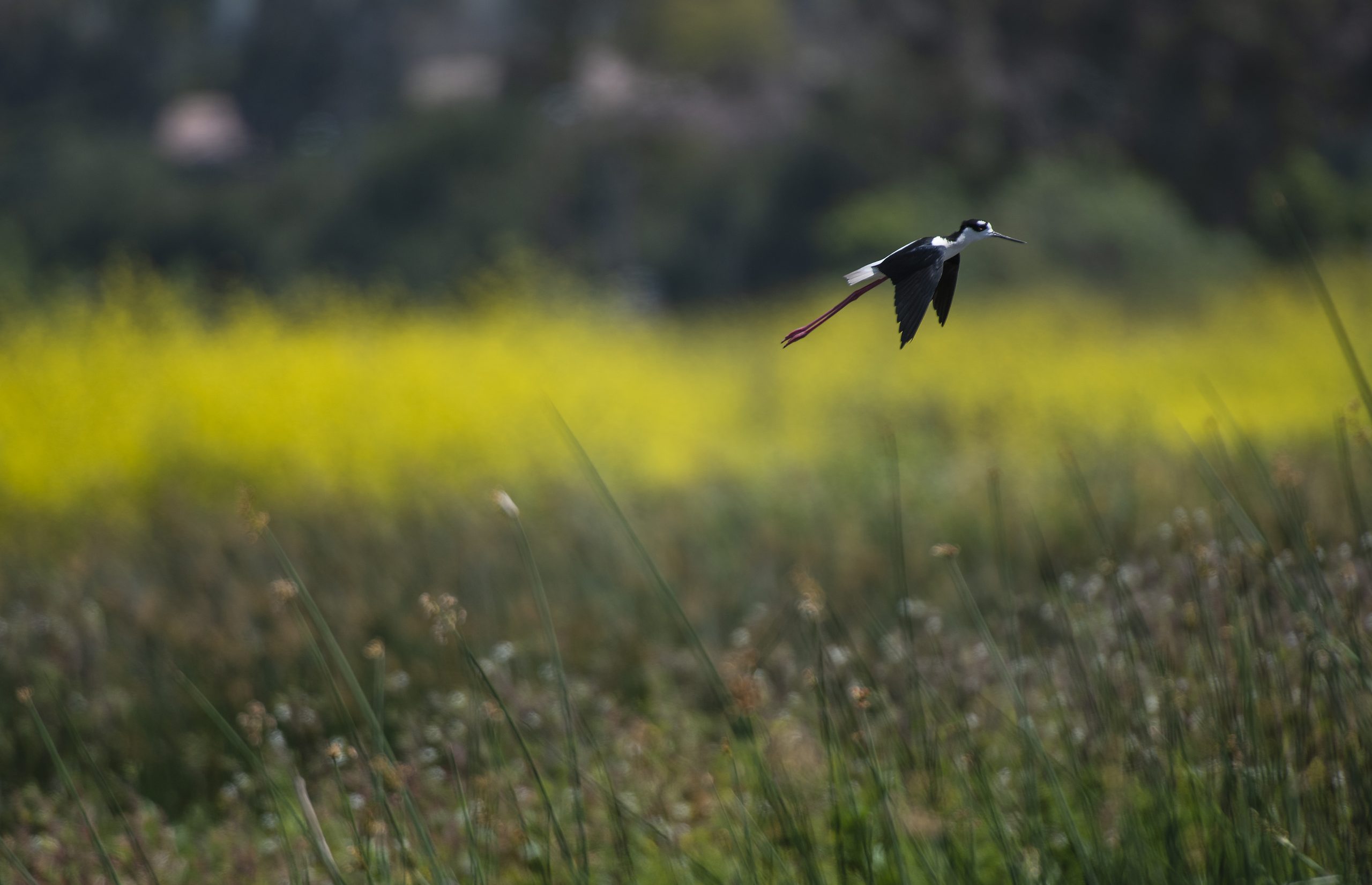
Photo: Steve Zylius/UCI
UC Irvine Natural Reserves.
Designed with Nature in Mind
Hospital windows have avian-safe glass patterns to reduce reflections and prevent bird strikes. A low “turtle wall” guides Western pond turtles away from the campus. A stormwater capture network cleans runoff before it reaches the reserve. And a 150-foot buffer of native plants – grown from seeds harvested from the marsh – separates the medical center from the sanctuary.
“We want to both respect the marsh and benefit from it for the wellness of our patients and co-workers,” Pratt says. “Being close to the marsh is a game changer.”
That philosophy ripples throughout the medical campus.
Most patient spaces overlook the wetlands. The central plaza between the hospital and the cancer center offers expansive marsh views. The café faces the marsh. Waiting areas frame the preserve through large windows. Outdoor patios invite patients, families and visitors to step outside and breathe. Cancer patients undergoing chemotherapy can even receive infusions on an outdoor terrace.
The connection to nature extends indoors, where 1,639 works of art fill the walls of the entire medical complex. These are not the abstract pieces sometimes found in healthcare settings, but rather images of natural Southern California vistas, activities, animals and people.
The art collection was curated by the UCI Health Art Committee, inclusive of local artists and led by UCI Health President and CEO Chad Lefteris and James Irvine Swinden, UC Irvine Foundation trustee and president of The Irvine Museum. Created by more than 200 artists, the art collection includes 243 commissioned originals, 76 murals and 1,320 giclée prints (high-quality fine art prints created with a high-resolution inkjet printer) from The Irvine Museum collection and contemporary artists.
The guiding philosophy was simple: Show people familiar sights of home.
“We chose artwork from local artists in the California impressionistic style – art that reflects what is familiar and comfortable,” says Ellen Khoudari, a UCI Health senior project manager who oversaw the look and feel of the space. “Art depicting settings from Santa Barbara to the Mexican border, from the Pacific Coast east toward Nevada. Because we know through science that when a person sees something familiar, it lowers their blood pressure and cortisol levels. That helps people heal.”
Intention in Every Detail
The art found in each building on the medical campus has a distinct thematic identity, and each floor tells its own story.
The Joe C. Wen & Family Center for Advanced Care celebrates natural ecosystems, with art inspired by Orange County’s wetlands, ocean and chaparral. One chaparral-themed floor features furnishings in soft oranges and yellows that echo colors found in the surrounding flora and fauna.
“We ended up with the Mission at San Juan Capistrano,” she says. “When you get off the elevators, the first thing you see is imagery of that place. Throughout the fourth floor, everything is about the mission – the bells, the sparrows. It’s just beautiful.”
Other floors feature Huntington Beach, Heisler Park and Victoria Beach.
The hospital itself emphasizes human connection. The third floor, dedicated to co-worker spaces, celebrates the human bond with animals.
“That floor is populated with images of service dogs, horses, pets – from chickadees to rabbits,” Khoudari says. “Our connection with animals, with communities, with our local environment – all of these are beneficial. You can reflect on what’s outside, so you’re not constantly dealing with the stress of a white wall. We also filled those spaces with color for our co-workers to enjoy.”
“Our connection with animals, with communities, with our local environment – all of these are beneficial.”
Ellen KhoudariSenior Project Manager, UCI Health
That same intentionality extends to each piece of furniture.
The planning team sought furnishings that would comply with the 2019 University of California sustainability guidelines: eliminating chemicals of concern, including formaldehyde, antimicrobials, flame retardants, vinyl and PFAS (“forever chemicals”); ensuring fabrics can be cleaned without dry-cleaning chemicals; and avoiding plated finishes containing heavy metals.
“We were determined that every stitch of furniture would not be harmful to our patients or our co-workers,” Khoudari says. “Let’s not forget that they are there all day long.”
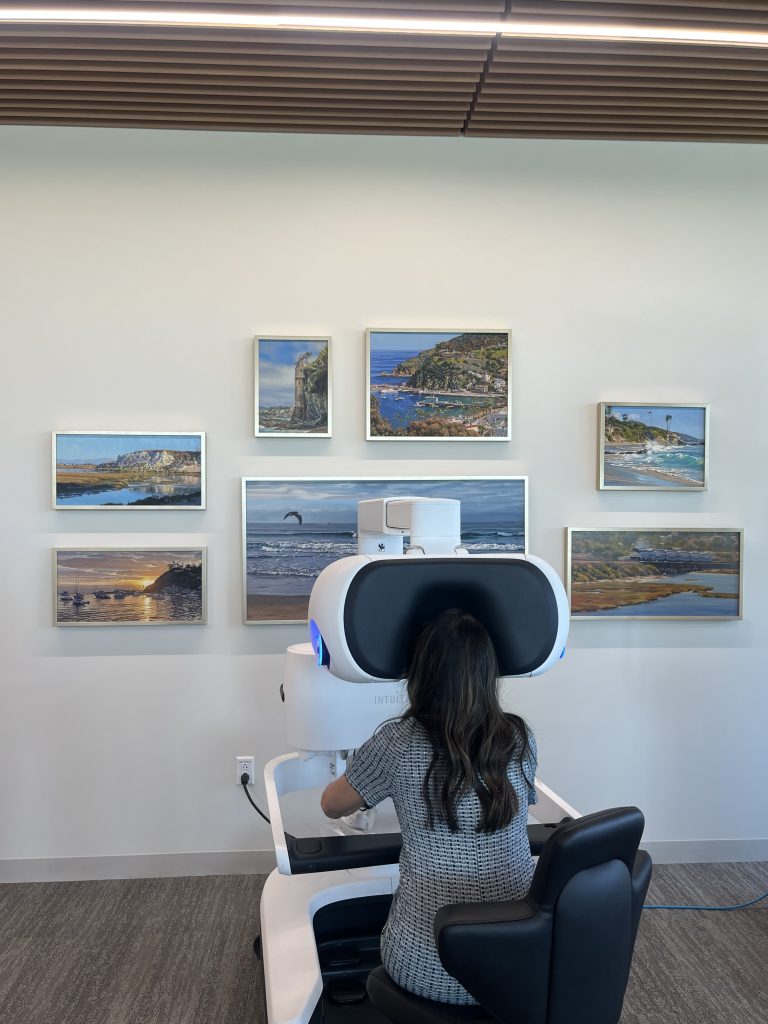
A guest of the UCI Health — Irvine community open house celebration enjoys a demonstration of a robotic surgery machine temporarily set up in the Chao Family Comprehensive Cancer Center and Ambulatory Care building.
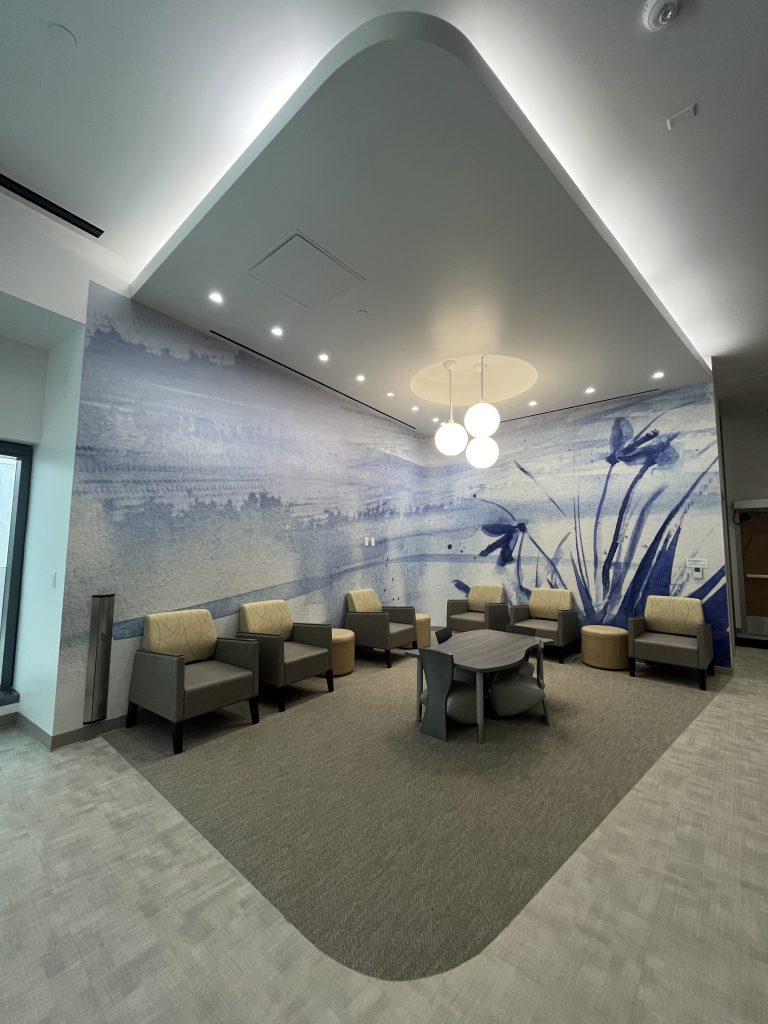
A waiting area inside the Chao Family Comprehensive Cancer Center and Ambulatory Care building features California coastal landscapes. Photo credit: UCI Health
A Space for Healing
“Personally, I’m most proud of the reaction I’m getting from patients,” says Paul Da Veiga, director of planning, design and construction for UCI Health. “The feeling of comfort, that sensory experience that makes you feel you’re in a space where you’re going to get healed.”
He has seen it in visitors who pause at a window, momentarily forgetting where they are. He has heard it from patients who arrived anxious and left calm.
“I’ve walked architects, engineers, patients, donors – all different types of people – through the site,” he says. “I always hear a similar reaction: ‘I just want to stay here. I want to hang out here.’ You don’t normally get that at a hospital. Usually it’s, ‘I can’t wait to get out of here.'”
The serene beauty of the marshland reminds patients, loved ones and co-workers of nature’s restorative qualities. While the hospital bustles with activity, the marsh is simply what it has always been: a place where birds rest on their long journeys, where light shifts softly across the water with the hours.
And that, it turns out, may be exactly what healing requires.
Help Transform Patient Care
When you give to UCI Health, your support advances innovative programs and world-class care that transforms lives.