Health psychologist Sarah Pressman addresses the science of positivity, how to break cycles of negative thoughts and simple ways to manage stress
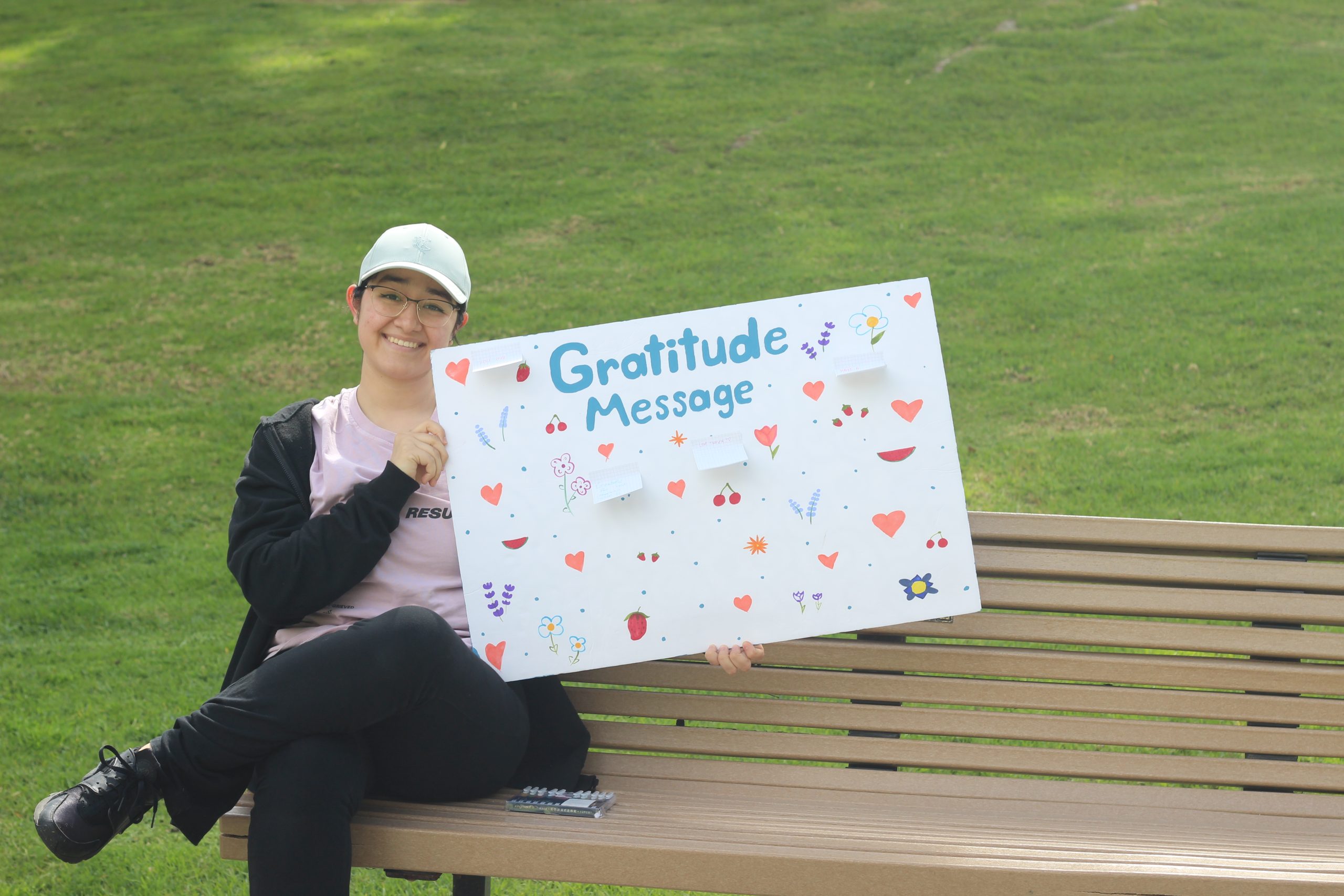
A student participates in Happiness Week, holding up a poster with gratitude messages.
Discover Joy. Combat Stress.
That’s the tagline behind UC Irvine’s Happiness Week, a growing campus tradition designed to support well-being during periods of high stress, like finals. Familiar sights on campus during Happiness Week may include students and staff taking a break from their busy schedules to snuggle with a puppy, write in a journal or join a knitting circle.
These small moments – aimed at helping people slow down and reconnect – are the brainchild of Sarah Pressman, Ph.D., a UC Irvine professor of psychology and an associate dean in the Division of Undergraduate Education. Her research explores how positive emotions shape physical health.
“Sometimes, the most powerful stress intervention is simply giving your nervous system permission to slow down.”
Sarah Pressman, Ph.D.UC Irvine Professor of Psychology and Associate Dean in the Division of Undergraduate Education
What Is Happiness, Really?
“I like to think of happiness as anything that signals pleasurable engagement with the environment,” Pressman says on the UC Irvine Podcast. Examples she gives include feeling happy, feeling calm and peaceful, or feeling excited and enthusiastic. “All of those are different kinds of positive emotions, but they all reflect the same thing: that things are going well.”
For Pressman, those moments come from everyday experiences: spending time with her family, working with students and watching them grow in confidence, playing pickleball or exploring beautiful spaces, such as the UC Irvine campus and local outdoor parks.
“Aldrich Park is definitely one of my favorite spots, especially when the light is coming through the trees late in the afternoon,” she says. “I try to do a mini ‘awe walk’ whenever I can.”
Sarah Pressman, Ph.D., UC Irvine Professor of Psychology and Associate Dean in the Division of Undergraduate Education
In addition to developing interventions that help people manage stress, Pressman’s recent work focuses on something slightly different: energy.
“Many people say they want to feel less stressed, but what they really want is to feel energized and able to engage fully with their lives,” she says. “We’re trying to understand where that sense of energy comes from psychologically and biologically, and how it helps people pursue goals, connect with others and stay healthy.”
Breaking the Cycle of Negative Thinking
Sometimes, it’s difficult to turn toward happiness. Our brains can ruminate on negative thoughts, replaying them in ways that keep us stuck.
Rather than suppressing those thoughts, Pressman suggests shifting toward something positive.
“When something good happens, even something small, try slowing down and fully noticing it,” she says. “Pay attention to the sensory details and how it feels in your body and mind.”
Positive moments often pass quickly. Taking even 20 seconds to absorb them can help.
Doing something active can help, too.
“A short walk, a conversation with a friend or engaging in a task often resets the mental cycle and brings new perspective,” Pressman says.
5 Tips to Manage Stress
Pressman offers a few simple, research-backed strategies that can help build resilience and improve well-being:
Keep a gratitude journal. Each night, write down three good things that happened that day, or write about all the good things that you’re grateful for and why. This practice has been shown to reduce pain and support long-term well-being.
Imagine your best future self. Spend some time writing what you hope to gain in your life. Write responses to prompts such as: What do you hope your life looks like in 10, 20 years? What are you doing? Who’s with you? These reflections can help clarify purpose and direction.
Do one kind thing each day. Moments of social connection are very important for well-being. Research shows that doing things for others improves our happiness levels more than traditional “self-care” activities, such as watching Netflix or taking a bath. These acts of kindness can be small things such as cooking a meal for a friend, buying flowers for a parent or partner, or calling a grandparent on the phone for a chat.
Eat more fruit and veggies. In one study, college students who upped their fruit and vegetable intake by 30 percent over the course of a week showed positive mood changes. Top happiness-promoting foods include kiwi, apples and carrots.
Build in moments to slow down. Sometimes, the most powerful stress intervention is simply giving your nervous system permission to slow down. Build short, intentional “slow-down” moments into your day. Even a few slow deep breaths can activate the parasympathetic nervous system, which helps the body shift into a calmer state.
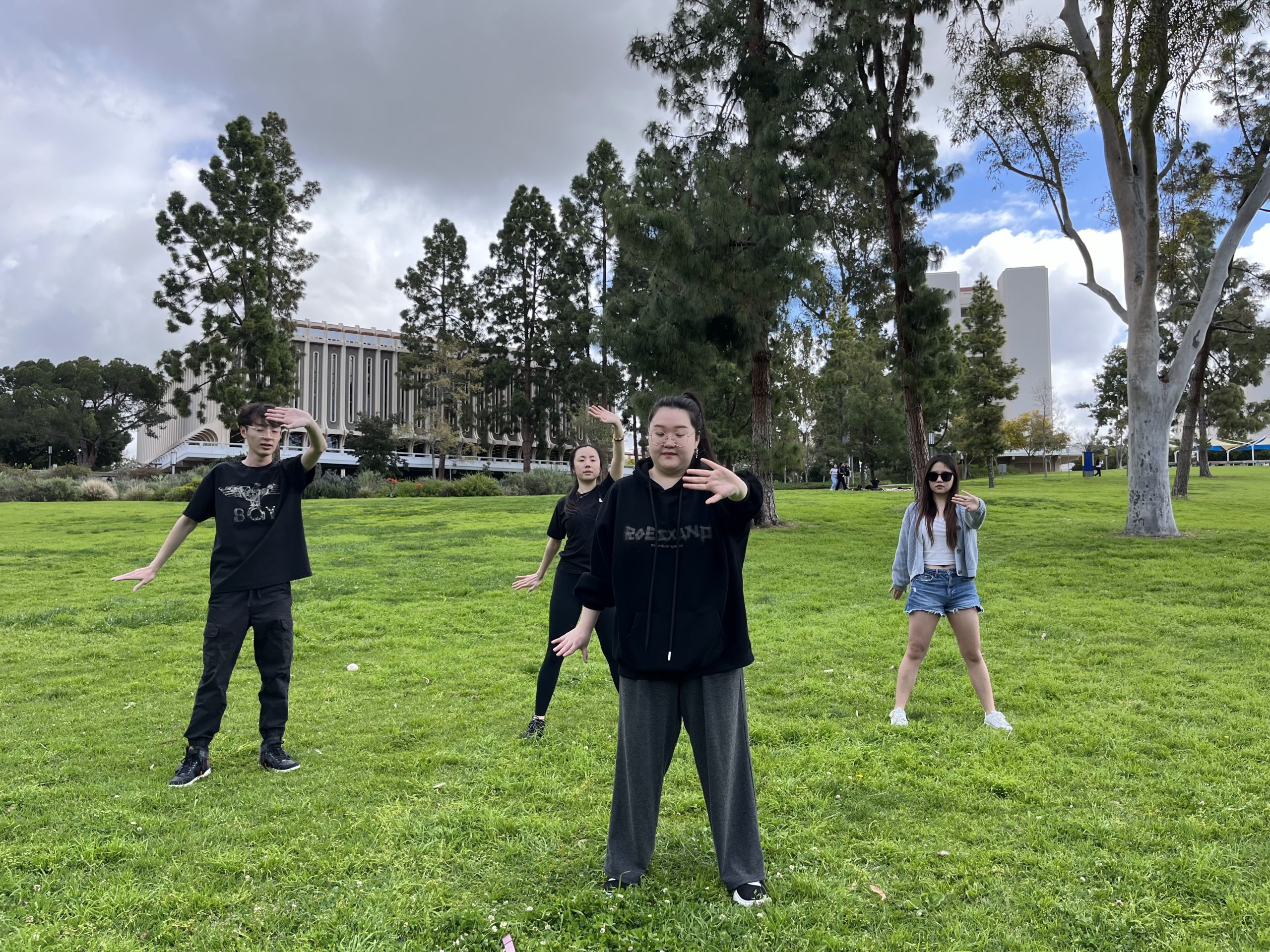
In years past, Happiness Week has offered activities around campus such as cat therapy, guided tai chi, punching bags and writing and reading gratitude messages.