IN THIS ISSUE
Anteaters in Action
California’s Top DocFaculty Focus
The ‘Organsmith’Anteaters in Action
Sisters in Good
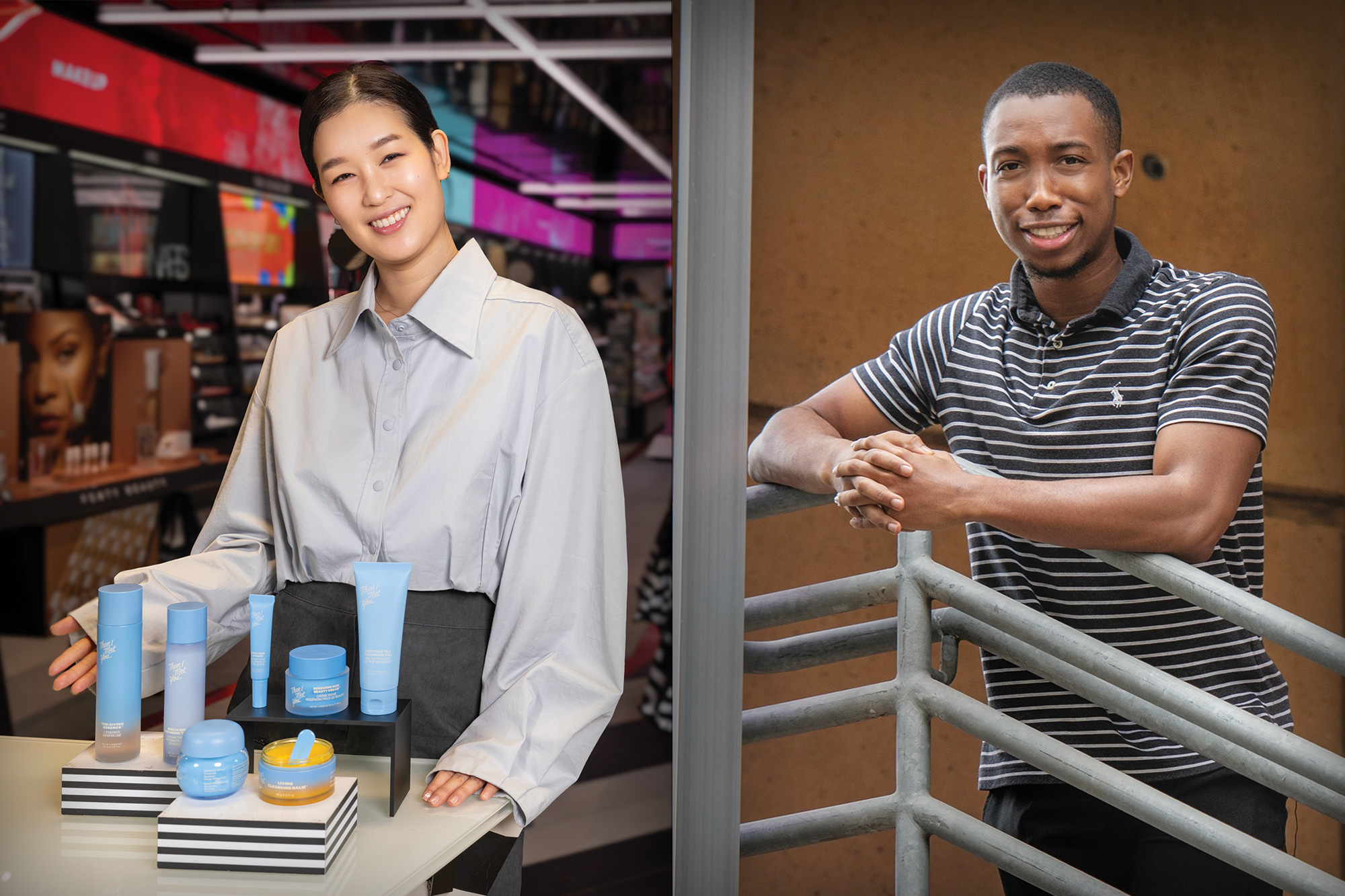
K-pop music is not the only South Korean import to take the U.S. by storm. South Korean skincare products have become tremendously popular in recent years, thanks in large part to Charlotte Cho ’06 and her Soko Glam online marketplace.
A Southern California native, Cho discovered South Korea’s “skin-first” philosophy while working in public relations for Samsung in Seoul – her first job out of college. “The culture I saw in South Korea was about skincare being a holistic practice about prevention, rather than turning back the hands of time,” she explains. “That felt really refreshing and different.” She trained as an aesthetician to learn more about the field.
Cho and her husband, David Cho, faced a lot of naysayers when, in 2012, they launched Soko Glam, which sells a curated selection of South Korean skincare products. “People weren’t shopping online then for new skincare brands they’d never heard of, touched or felt,” she says. But Cho was undaunted, determined to see her passion project succeed. She’d worked since the age of 16 and paid her way through UC Irvine; she was used to hard work and long hours. And Cho has an independent streak. “I’ve always been willing to try things no one has done before,” she says.
Drawing on her UC Irvine film and media studies degree, she launched The Klog, a blog to educate consumers about South Korean beauty practices. Before long, well-known South Korean beauty brands such as Skinfood and Missha approached Cho directly to be featured on Soko Glam – a major milestone. Media coverage, including in The New York Times, drove even more traffic to the website. As revenues grew, Cho noticed that the majority of Soko Glam’s customers were not Asian. “That was exciting,” she says. “We were appealing to a diverse group of customers.”
In 2018, Cho launched her own Korean sensorial skincare line under the name “Then I Met You.” “It’s a phrase to describe a positive turning point in your life,” she says. The brand already sells online and in Sephora stores overseas. It will make its U.S. debut this spring, when it will be featured on the “Next Big Thing” shelf in 400 Sephora stores across the United States – including the outlet at South Coast Plaza in Costa Mesa. “That’s where I used to go all the time when I was a UCI student. It was the place to be,” Cho says. “The fact that Then I Met You will be sold there is so exciting.”

With their fledgling import business Global Savors, David Sanusi ’21 and Yohan Ranaivo ’21 are on their way to becoming oil barons – coconut oil barons, that is. The partners are forging connections with international suppliers and providing high-quality coconut oil, coconut sugar and other ingredients to U.S. manufacturers of cookies, ice cream and other sweet treats.
When they first met as roommates in Arroyo Vista’s Ele Si Rosa Parks Theme House, Sanusi, an international studies major from Los Angeles, and Ranaivo, a business economics major from Madagascar, recognized in each other a kindred entrepreneurial spirit. “We were constantly looking for different ways to generate income in college,” Ranaivo says. They hosted events, such as college parties at external venues that drew attendees from across Southern California. They bought odd items for cheap on Craigslist – a fish tank, a set of weights, etc. – and resold them at a profit on the OfferUp website.
Their pivot to food ingredients came through a family connection: Ranaivo’s aunt is Madagascar’s second-largest producer of Malagasy vanilla and cocoa beans. The pair took delivery jobs with Instacart one summer to pay for their initial inventory of Madagascar spices and other ingredients and to launch their business under the name Madagascar Savors. They went door to door to restaurants in upscale Los Angeles neighborhoods to pitch their products.
Through a networking event at UCI Beall Applied Innovation, they found a key mentor: Peter Guidry, a Temecula marketing consultant with spice industry connections. “He got us to think bigger and has helped us learn how to navigate negotiations,” Sanusi says. Once the pair realized that there was greater profit potential with coconut oil and sugar out of Indonesia, they broadened their focus and changed their name to Global Savors.
“We understand what each of us does well. We have different skill sets that are equally important in helping our business continue to grow.”
As they’ve doubled their revenue in each of the past two years, Ranaivo and Sanusi have experienced the risks and rewards of global commerce. They’ve learned to quote freight prices with enough buffer to account for the random weather, geopolitical events and trade issues that can send rates soaring. They’ve learned to closely monitor and adhere to the exacting regulations and certifications for organic products, which most of their customers prefer.
As chief operating officer, Sanusi handles such regulatory and financial matters, while Ranaivo, as CEO, manages customer relationships and new opportunities, which are growing. Their products are now used in such items as peanut butter, chocolate and cookies and in retail brands sold in grocery outlets like Whole Foods, Costco and Kroger. “We understand what each of us does well,” Ranaivo says. “We have different skill sets that are equally important in helping our business continue to grow.”
If you’re a UC Irvine alum with an interesting story to tell, we want to hear from you! Did you start a business or make it big in an industry? Do you love what you do, either for work or as a hobby? Drop us a line – you might be featured in a future issue of The Anteater.